
This section of the website is aimed at people who are new to Scenic Painting. If you're already working in the industry you may not find this useful, but for those starting off this section will be full of valuable information.

Scenic painting is the craft of painting three dimensional objects, (scenery) so that the observer believes the story you are telling them.
Scenery is made of various types of wood and sheet material, metal, plastic cloth and sometimes plaster. Scenic painters invariably then paint that scenery to look like something else.
Let's illustrate this by looking at a simple room. On stage or screen this will be made of wooden flats joined together to make the right shape. Mouldings will be added, skirting boards, dado rails picture rails. There may be an elaborate cornice which will be made of plastic vacuum formed (or vac form) mouldings, or even plaster. It's possible that there will be some metal items, especially where strength is required, a staircase balustrade for example. So we have a room made from lots of different materials.
Scenery is made of various types of wood and sheet material, metal, plastic cloth and sometimes plaster. Scenic painters invariably then paint that scenery to look like something else.
Let's illustrate this by looking at a simple room. On stage or screen this will be made of wooden flats joined together to make the right shape. Mouldings will be added, skirting boards, dado rails picture rails. There may be an elaborate cornice which will be made of plastic vacuum formed (or vac form) mouldings, or even plaster. It's possible that there will be some metal items, especially where strength is required, a staircase balustrade for example. So we have a room made from lots of different materials.
Now the scenic painter would prepare all of these surfaces for painting. The different surfaces or materials would need different preparation, cleaning, sanding sealing and priming with various types of primer. When prepared the scenic painter paints the room the right colour, hangs wall paper, makes the gloss bits glossy.
Now we have a brand new room. The trouble is it's too new. Looks like a Childs toy, like a doll's house. On stage nobody is going to believe it's real.
Next the scenic painter will dirty the room down so it looks lived in. It may need to be really grotty looking. Nicotine stained and grimy. Layers of dirty washes into corners and mouldings, applied with a brush in small areas or a spray gun in larger areas. It may need a light aging, three or four years old. This requires a more subtle approach and more skill!
Now we have a brand new room. The trouble is it's too new. Looks like a Childs toy, like a doll's house. On stage nobody is going to believe it's real.
Next the scenic painter will dirty the room down so it looks lived in. It may need to be really grotty looking. Nicotine stained and grimy. Layers of dirty washes into corners and mouldings, applied with a brush in small areas or a spray gun in larger areas. It may need a light aging, three or four years old. This requires a more subtle approach and more skill!
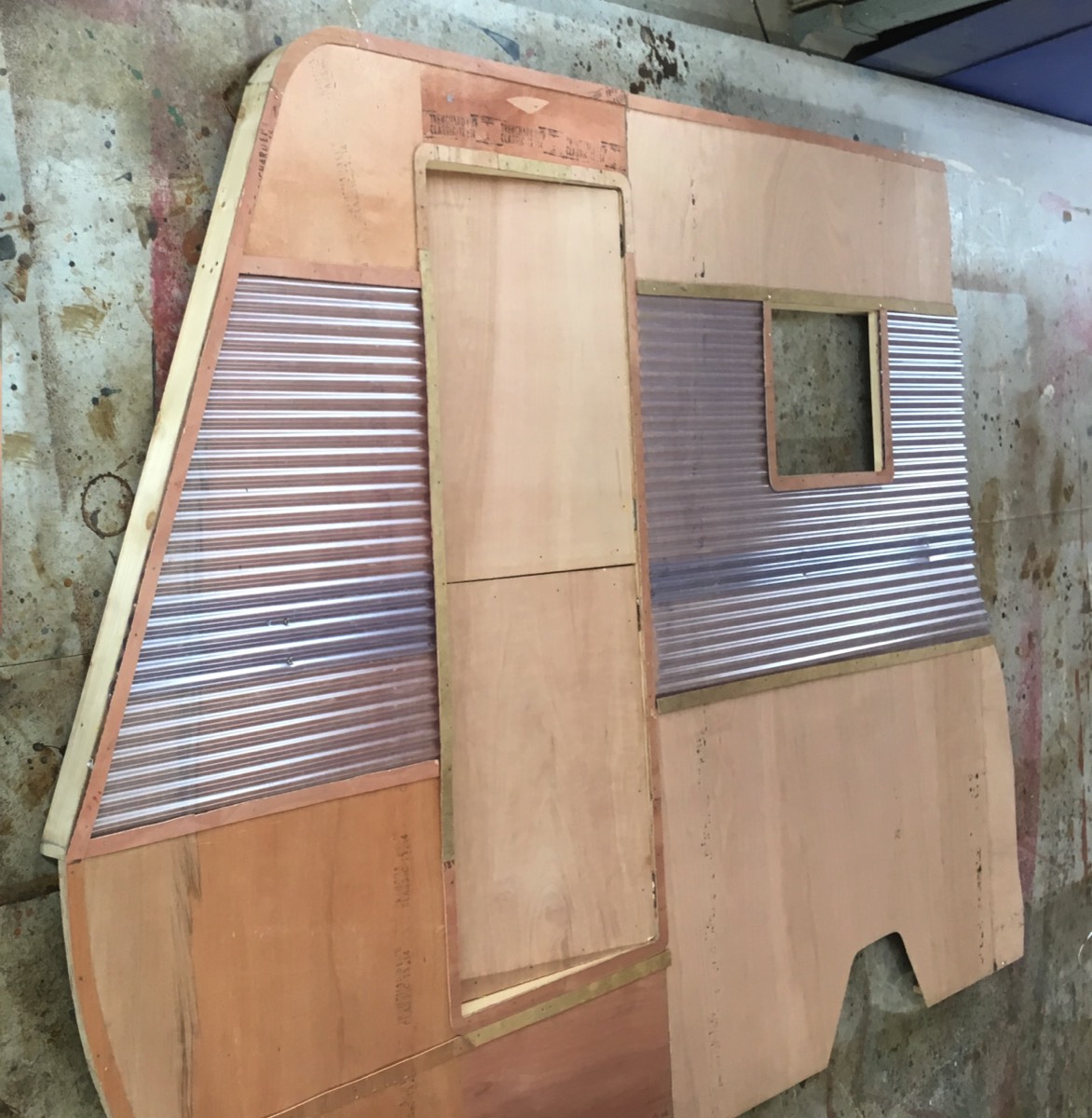
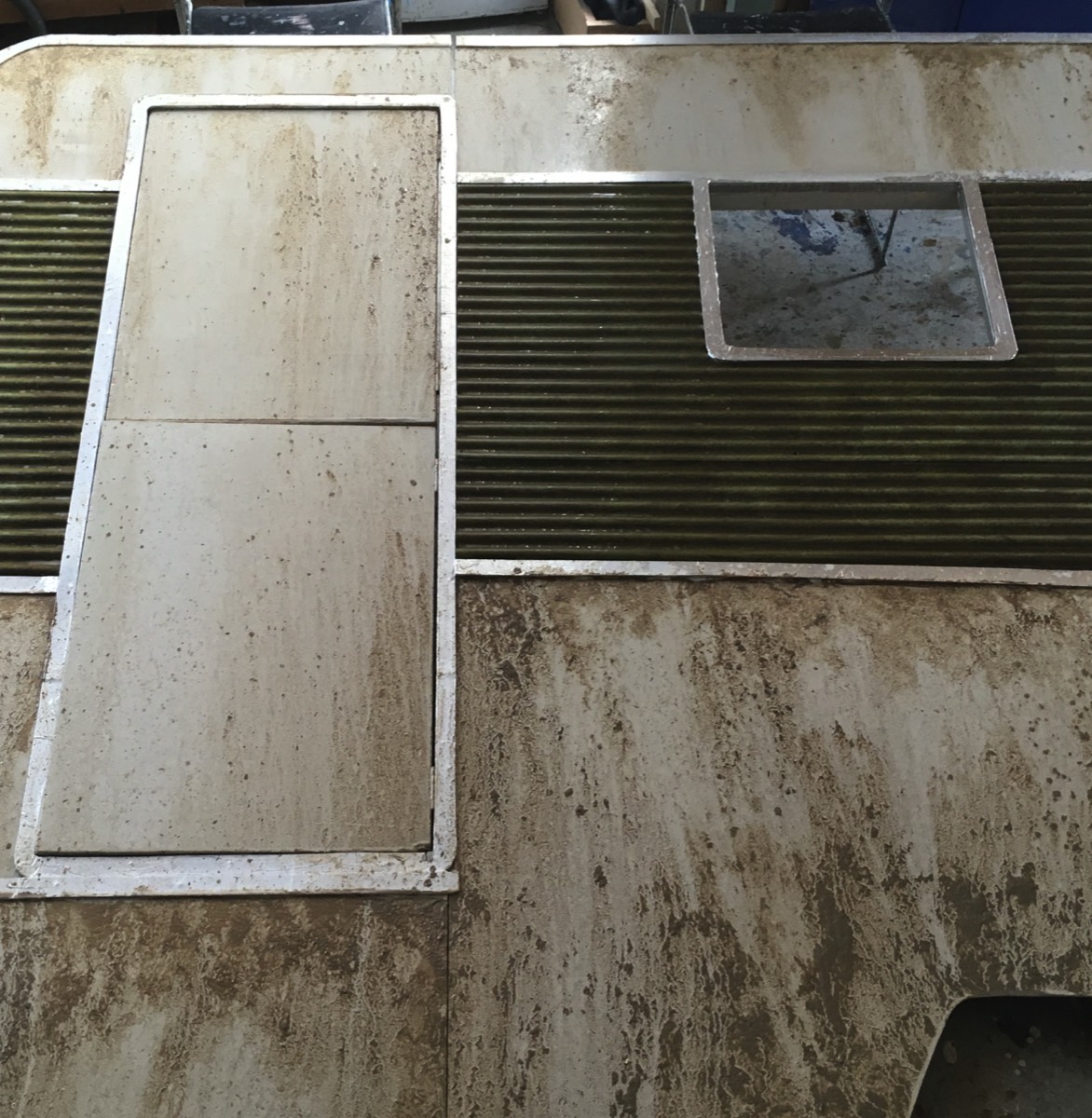
Here, a simple wooden plastic and metal flat (rather badly made as it happens) is turned into the side of a rotting caravan. It's a good example of heavy ageing.

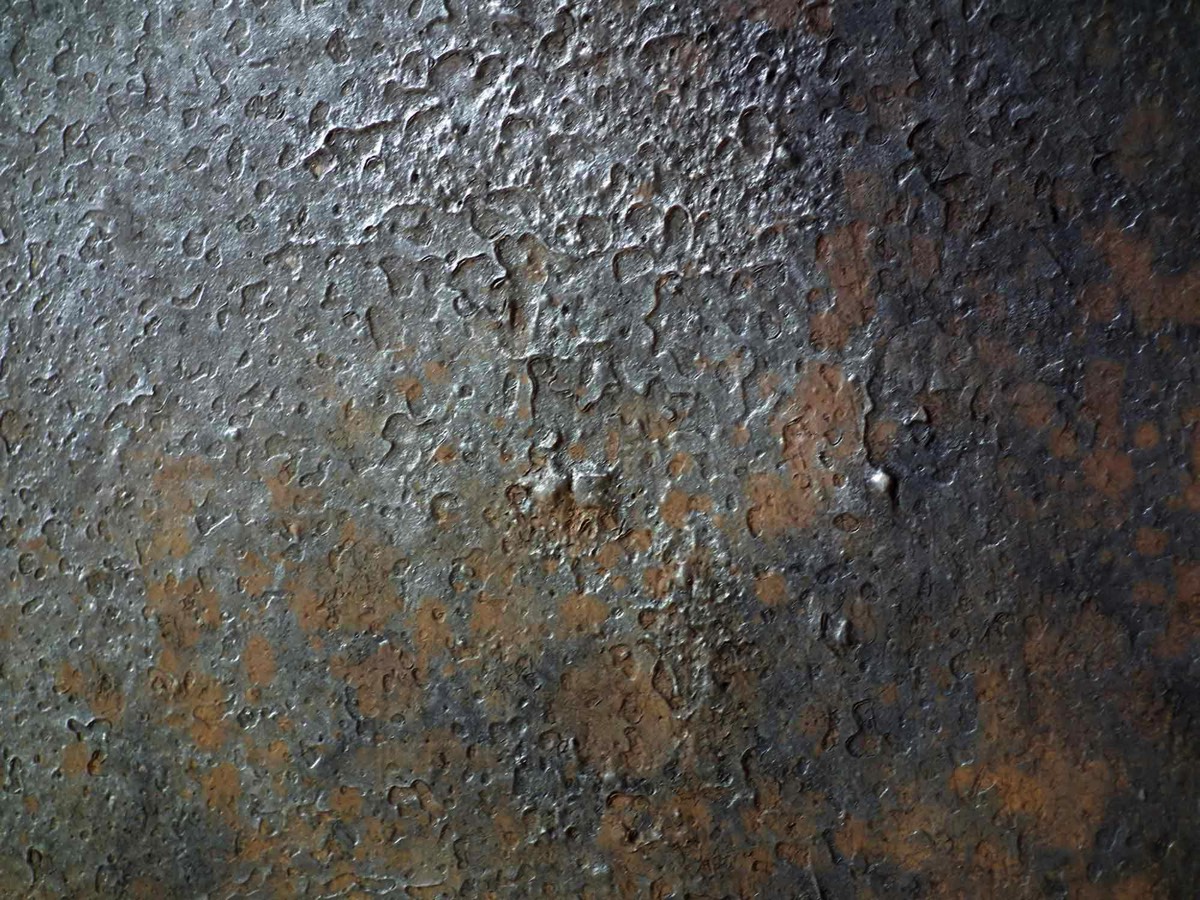
Scenic painters create a multitude of faux finishes. As if modern day alchemists they turn plywood and mdf , plastic metal and fabric into rusty steel, crumbling stone, marble and gold, modern bricks and ancient mosaics.
Scenic painters must learn how to create many woodgrain finishes. Rough timber beams to fine inlaid marquetry, polished burrs to weathered fence posts.
They must learn to gild, to marble and to create signs. They will create stained glass and ceramic tiles. They will learn to use a wide range of specialist tools and materials from feathers to laser levels, airless sprayers to gaining combs.
Scenic painters must learn how to create many woodgrain finishes. Rough timber beams to fine inlaid marquetry, polished burrs to weathered fence posts.
They must learn to gild, to marble and to create signs. They will create stained glass and ceramic tiles. They will learn to use a wide range of specialist tools and materials from feathers to laser levels, airless sprayers to gaining combs.
A large range of materials must be learned and understood, textures, varnishes ,dyes and stainers, paints and powders.
The job is an active one. Scenics need to be reasonably fit as the job will involve long days, some lifting and climbing.
A head for heights is an advantage, particularly when working in the film and television industries. Scenic need to learn how to use access equipment, cheery pickers and scissor lifts Genies A frame ladders and Zarges.
Above all, Scenic painters are team players, problem solvers, people who enjoy working with others and who are interested in seeing a designers vision come to reality.
The job is an active one. Scenics need to be reasonably fit as the job will involve long days, some lifting and climbing.
A head for heights is an advantage, particularly when working in the film and television industries. Scenic need to learn how to use access equipment, cheery pickers and scissor lifts Genies A frame ladders and Zarges.
Above all, Scenic painters are team players, problem solvers, people who enjoy working with others and who are interested in seeing a designers vision come to reality.
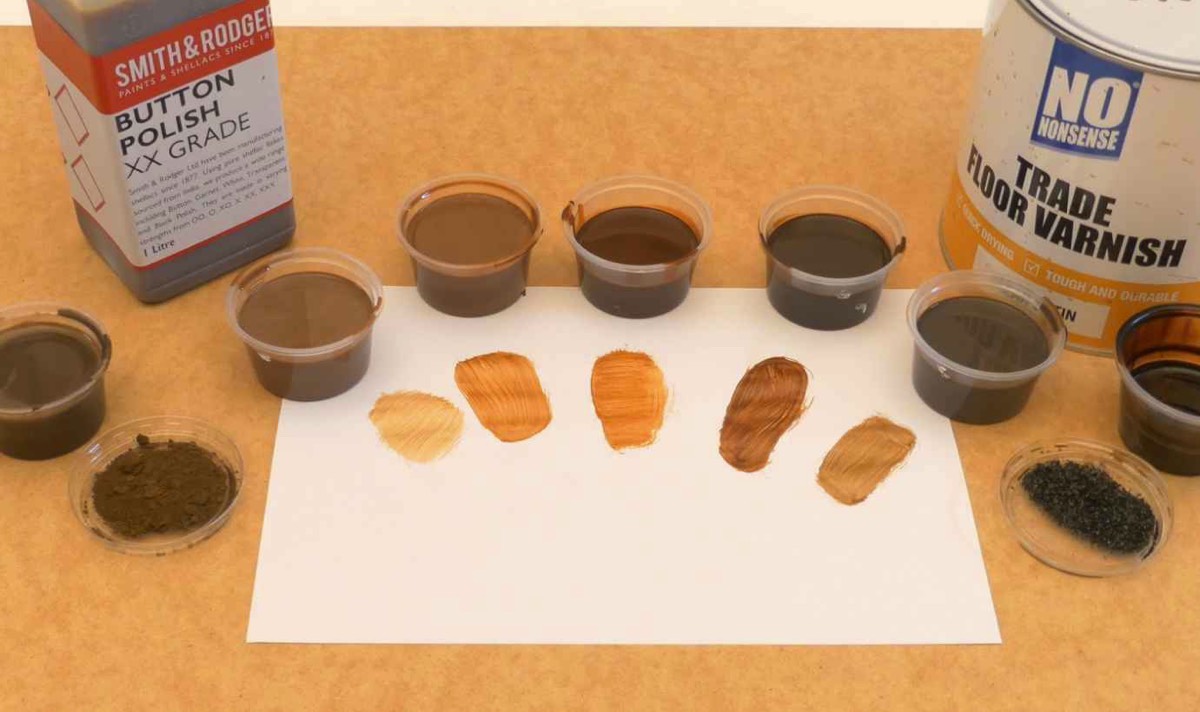
A selection of shellacs, a types of spirit based varnish made from a resin produced by the Lac bug which is farmed in taste numbers to produce the material
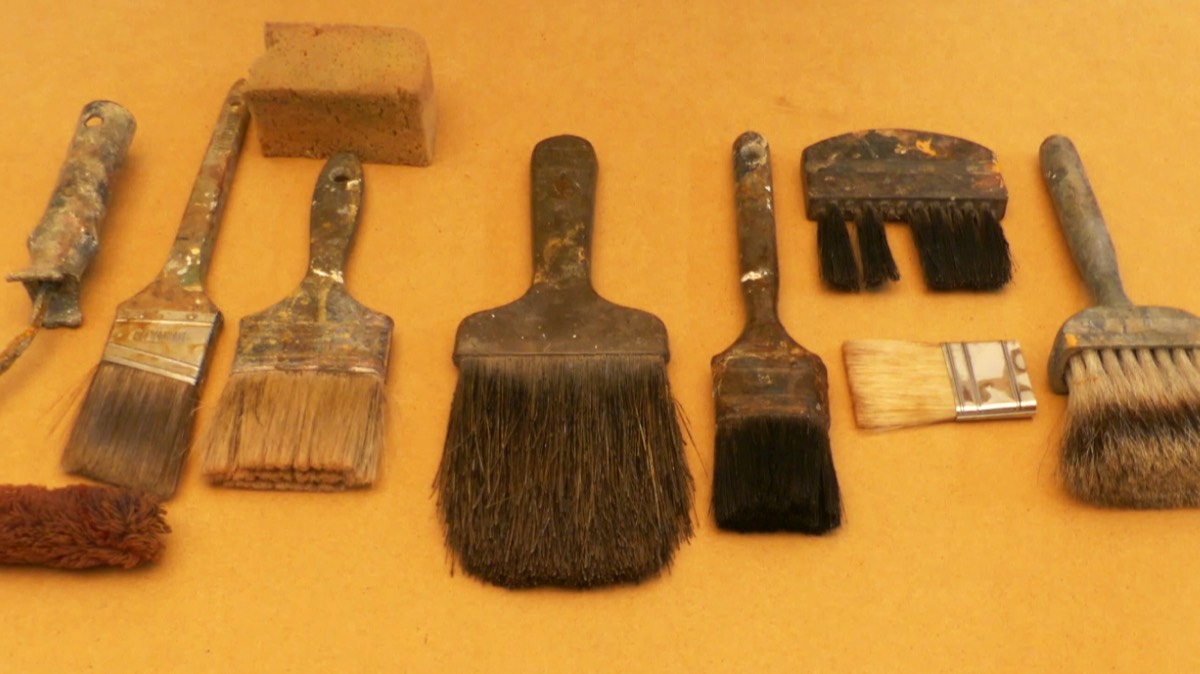
A Range of specialist brushes used to create wood grain pattern (or figures). Some of these tools will also a painter a lifetime.

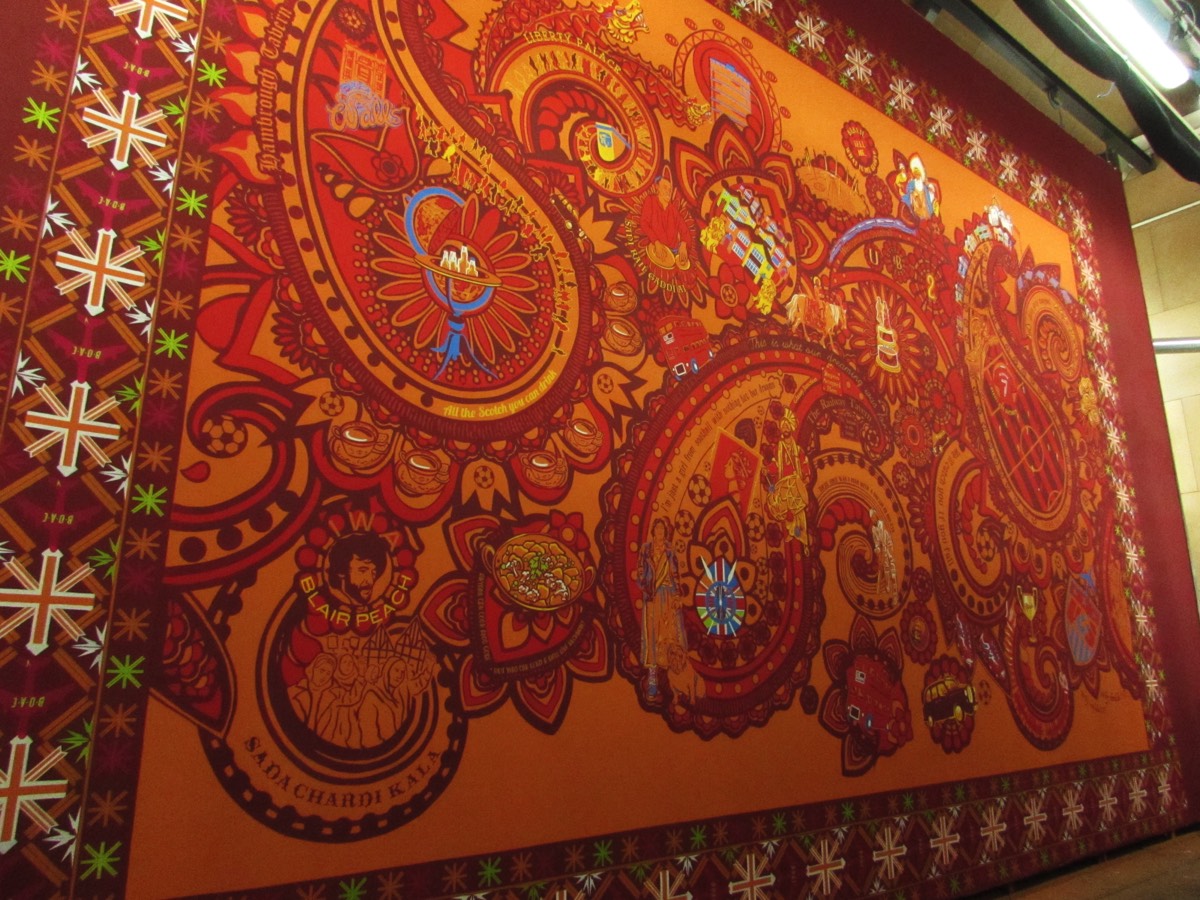
Scenic Art involves drawing. Scenic painters don't really need to be able to draw well but scenic artists do. Scenic artists paint huge paintings known as drops or cloths in the theatre world. If the cloth is at the front of the stage it'll be called a front cloth, at the back a backcloth). In film or TV they might be referred to as "backings"
A scenic artist needs to have a good understanding of perspective, and architecture. They need to understand colour theory and how to later paint. Above all they need to be able to draw.
Drawing is a time consuming business and time is money! So scenic artists sometimes use methods to speed up the drawing process. They use digital methods to get the drawing onto the work like projectors or even VR head sets. They use pounces (perforated drawings) to repeat elements within a drawing, as well as stencils and other devices. However the need to fine tune and adapt means that a scenic artist must be able to draw.
A scenic artist needs to have a good understanding of perspective, and architecture. They need to understand colour theory and how to later paint. Above all they need to be able to draw.
Drawing is a time consuming business and time is money! So scenic artists sometimes use methods to speed up the drawing process. They use digital methods to get the drawing onto the work like projectors or even VR head sets. They use pounces (perforated drawings) to repeat elements within a drawing, as well as stencils and other devices. However the need to fine tune and adapt means that a scenic artist must be able to draw.
If you are painting work for the theatre the distinction between the two roles is less distinct. Painters at the National Theatre or the Royal opera House may be paining brick walls one week and intricate backdrops the next. The balance will be more scenic painting and less scenic art but the same painters will do both jobs.
If you are painting work for the screen it's a bit different. Here the work forces are much larger and the painters are divided into two groups. The scenic artists will be working in the Art Departments and will just paint backings. The scenic painters will work in th e construction department and will not do work involving drawing. Scenic artists get paid more, however there is much less work to go round.
Increasingly digital technologies have replaced the work of the scenic artist. Digital printing for example and work using a green screen where the backgrounds are added later.
If you are painting work for the screen it's a bit different. Here the work forces are much larger and the painters are divided into two groups. The scenic artists will be working in the Art Departments and will just paint backings. The scenic painters will work in th e construction department and will not do work involving drawing. Scenic artists get paid more, however there is much less work to go round.
Increasingly digital technologies have replaced the work of the scenic artist. Digital printing for example and work using a green screen where the backgrounds are added later.
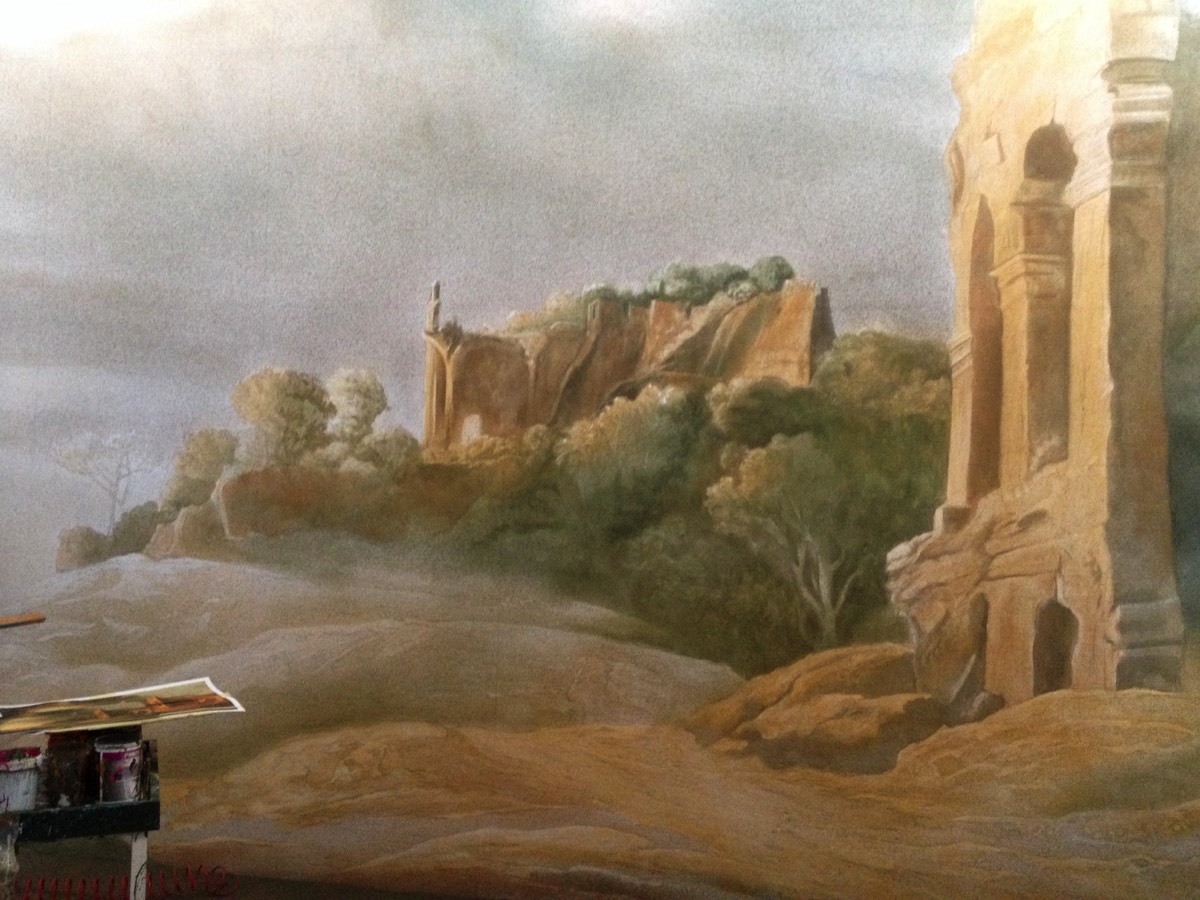
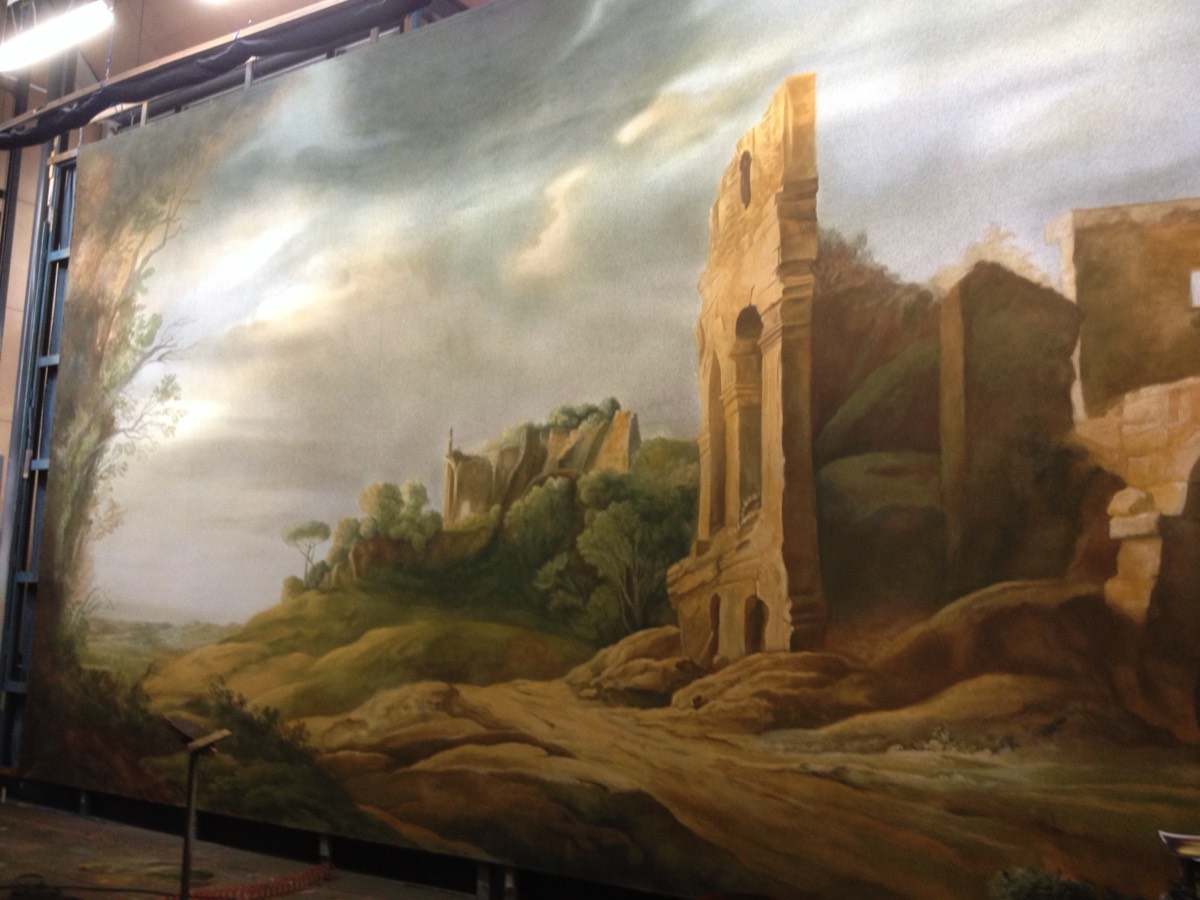
A backdrop for a production of Lucia Di Lammermoor Designed by Jonathan Fensom for Buxton Opera House, painted by Alice Collie and James Rowse

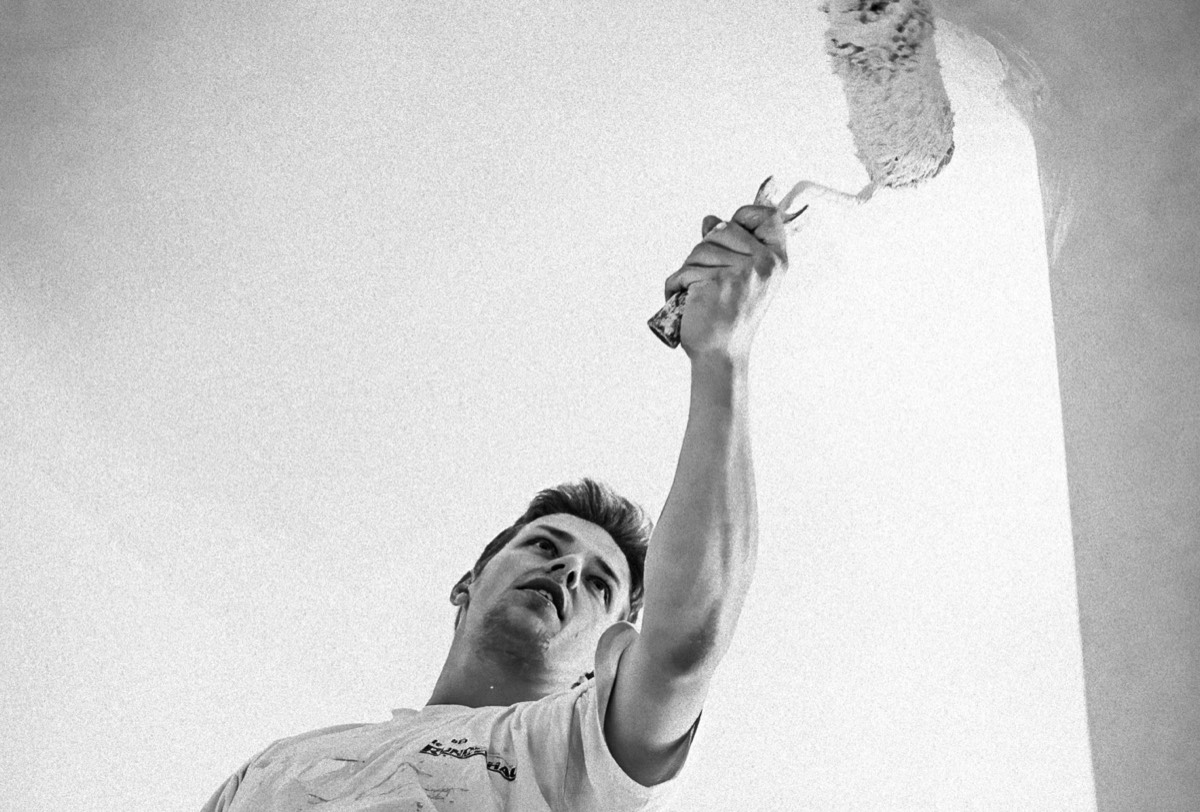
Scenic Painters and artists find work in a number of industries. Theatre film and TV are all sources of work. But there are other industries too. Commercials are an obvious source of work. Music festivals have become much more important and soak up many scenic painters in the summer months. The fashion industry also uses scenery for photo shoots and shows. Theme parks, escape rooms, immersive installations, even the fine art world can all call on the services of scenics.
Many scenics work in several different sectors. Wherethey look for work might depend on a number of factors. These include
Many scenics work in several different sectors. Wherethey look for work might depend on a number of factors. These include
- Where in the country they live
- what level of experience they have
- What level of pay they are looking for
- What time of year it is
- Which industries are doing well and which badly
Pay varies a lot. Some music festival work is unpaid but for accommodation food and a ticket for the festival. More experienced painters on bigger festivals will expect to be paid as well as getting these benefits. Theatre work is paid properly but the rates are not that great. Theatre is not a massively wealthy industry after all so there isn't that much money in the industry.
TV and film work tends to be better. Even within the film industry rates differ. On a large film there are different grades of painter, a standard painter, a charge hand who runs a small team of painters, a supervisor who runs a number of of teams, and an HOD painter in charge of the whole production.
Standby painters are better paid than standard painters too. They are part of a small team of technicians who work closely with the art director at each shoot, ready to put something right if last minute changes are needed.
TV and film work tends to be better. Even within the film industry rates differ. On a large film there are different grades of painter, a standard painter, a charge hand who runs a small team of painters, a supervisor who runs a number of of teams, and an HOD painter in charge of the whole production.
Standby painters are better paid than standard painters too. They are part of a small team of technicians who work closely with the art director at each shoot, ready to put something right if last minute changes are needed.
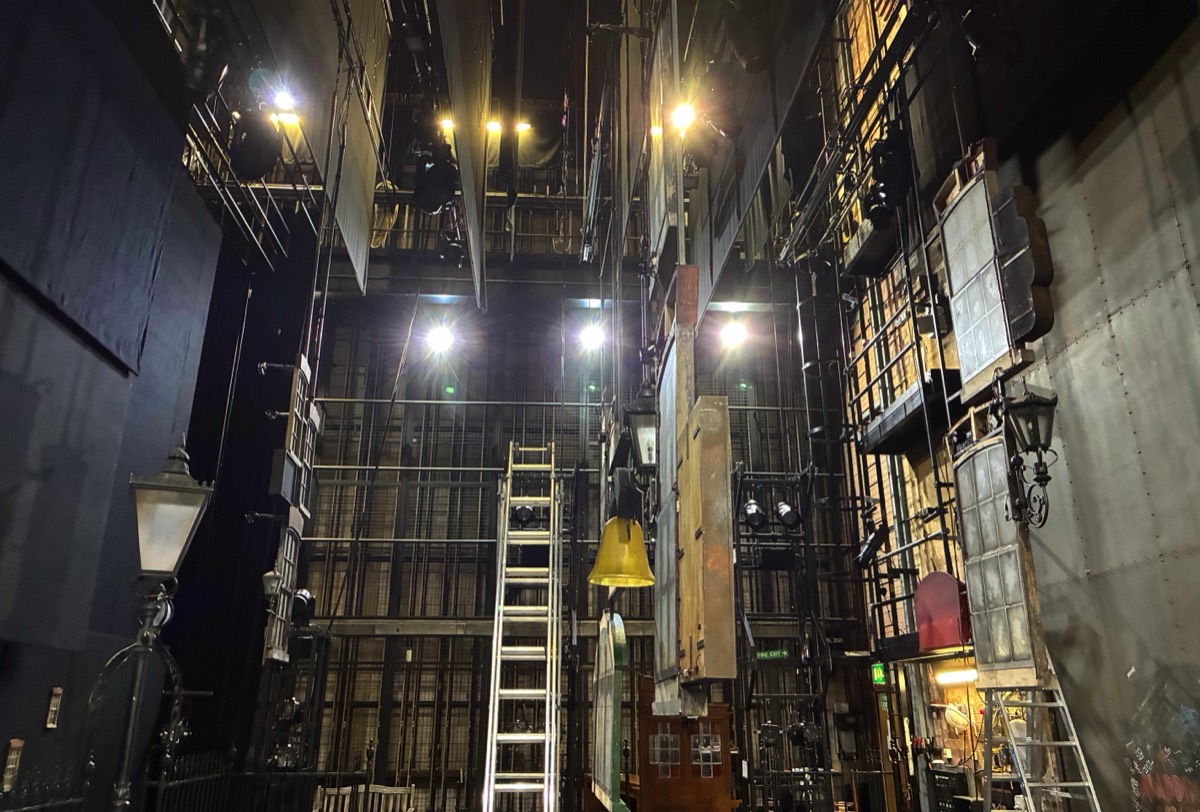
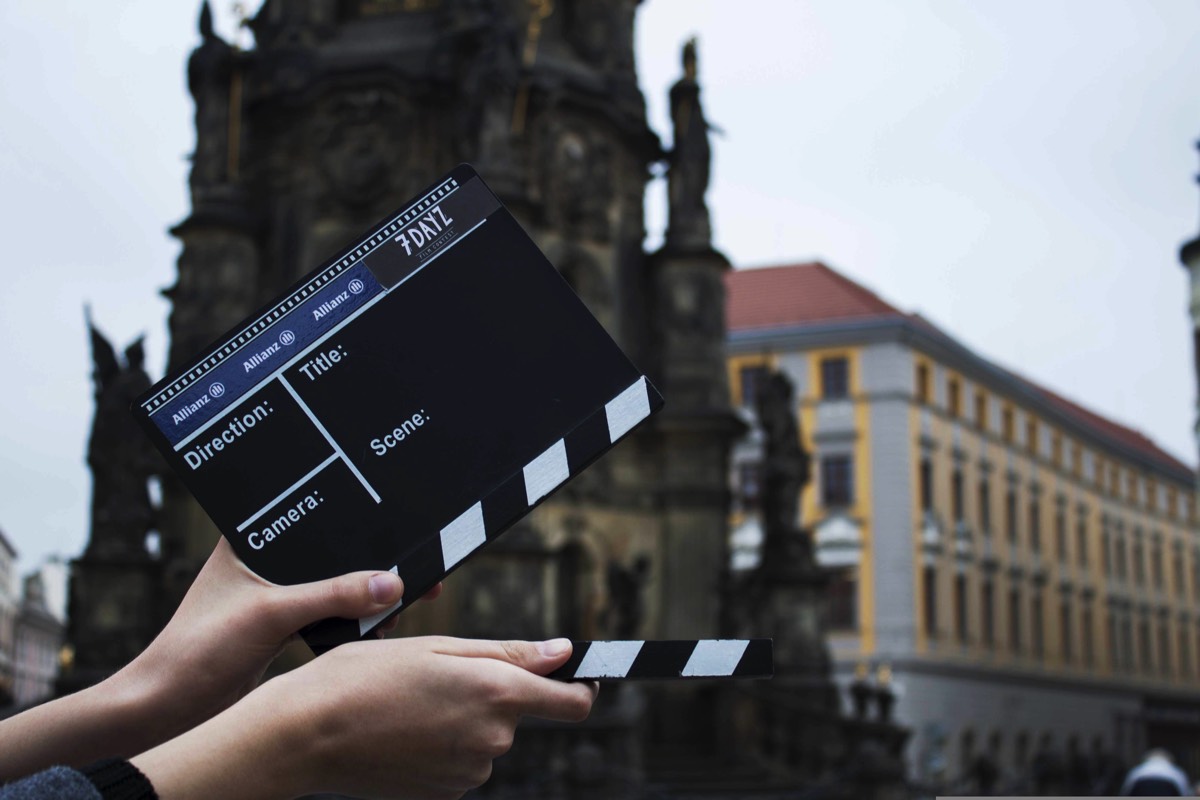
Where ever you find work a scenics workplace involves lots of paint! Even if you are stood near the camera…..


Not everyone is going to wan this type of work, of course. There are good points and bad points to every job and scenic painting and scenic are no different. So lets lookout the pros and cons
PROS
- Scenic painting is a way of making a living with a paint brush. Let's face it, besides decorating there aren't that many ways of doing that.
- Most scenics are self employed which means if you don't like working in one place you can move to another.
- You can earn a reasonable amount of money depending on how many weeks a year you are in work and which sector of the industry you work in. Look at current BECTU rates for painters in the film industry to get an idea of the better paid end of the industry
- It's a creative and varied job working as part of a creative team. The job can take you to some interesting work places, film sets opera houses, music festival etc.
CONS
- Its a messy and dirty job sometimes
- It can be repetitive. If you are painting a brick wall for the back of a set in an opera house, thats a lot of bricks and you'll be doing it a while
- Work is irregular in most cases. While there are a handful of full time scenic jobs most scenics are freelance and as such small businesses. How much you earn will depend on how many weeks a year that you work.
- As a self employed person there are no company benefits. So sick pay maternity pay, company pension etc don't exist. This means that you have to be good at planning your finances
- It can be physically demanding and you may end up working some unsociable hours.

Where ever you find work a scenics workplace involves lots of paint! Even if you are stood near the camera…..